
When I tell people I prepare strata reports, or that I’m a “strata inspector”, it’s not uncommon for them to think I mean I am a building inspector preparing building reports.
Or even if I’m not preparing building reports, that I am still looking at the building in person as part of my inspection.
Part of the confusion, I think, is that there is no “official” definition of the terms “strata inspector” or “strata report”.
I normally start my posts with a basic concept, and then dial into a particular aspect of that concept, but today I’ll just describe the two terms, and then discuss some elements of this sub-part of the strata industry.
strata inspector
What is inspected by strata inspectors is not the physical strata building, but the set of books and records held by the strata scheme.
Any owner can schedule such an inspection (also called a “strata search”), and owners can authorise others to undertake such an inspection. There are prescribed fees the owners corporation charges anyone undertaking such inspections.
So those who inspect strata records as a business offering have come to be known as “strata inspectors” (also sometimes “strata searcher”).
As an aside, under s43 of the Property and Stock Agents Regulation 2022 (NSW), all strata committee (and Community Association committee) members can inspect the books and records for free.
strata report
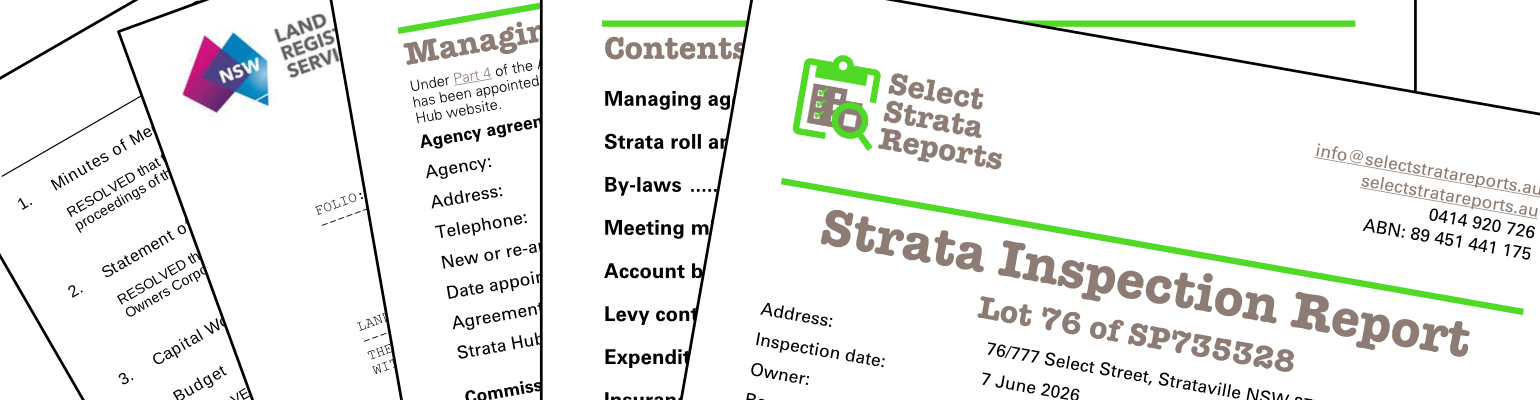
Once a strata inspector has completed their inspection, they prepare a report, being a summary of key information and some interpretation of what they found. This is then collated with a set of key documents.
This collated set of documents comprises the full “strata report”.
Traditionally, strata reports have been commissioned by prospective strata property buyers to aid their purchase decision on a given strata property.
These days, many strata property vendors (sellers) get a strata report done at the start of the sales campaign as a document to support that campaign.
These are usually offered at a discount (or for free), with the successful property buyer paying a differential to the full report cost (if they bought the discounted report).
While this may be seen as a convenience for purchasers, it should be remembered that such a report may be out of date if, for example, meetings have been held or other events relevant to the owners corporation have occurred since it was prepared.
One last point: because there are no requirements for someone to operate as a strata inspector, understanding the qualifications and experience the strata inspector brings to the role, and ensuring they have professional indemnity insurance, are critical considerations when looking at any given strata report.
I am a NSW licensed strata manager, and the endorsements on the Select Strata Reports home page speak directly to my experience in and passion for strata management and compliance.
When you order a report from Select Strata Reports, you are getting a comprehensive view of the management of the owners corporation, informed by a deep understanding of strata legislation and strata management practice, and backed by professional indemnity insurance.
Next week, we’ll take a few minutes to talk about minutes – meeting minutes, that is. What are they, what do they record, and what happens if they’re wrong…or missing?
Strata Report Giveaway!
Yes, the offer still stands! I will prepare a free strata report (valued at $385!) for a strata scheme in NSW (remote inspection for management agencies outside Sydney metro area) to the first commenter or contact via the details below who can correctly identify why I use the dummy strata scheme SP735328 (other than its unlikelihood to ever be issued!).
This prize is transferable, so if you or someone you know is looking to buy in strata and needs an independent, professional, and thorough strata report, get solving, get in touch, and maybe get some brownie points!
Leave a Reply